"መልአክ ገብርኤል"
ወደዚህ አቅጣጫ ያዞራል። ለአሜሪካዊው የቀልድ መጽሐፍ አርቲስት፣ መልአክ ገብርኤልን ይመልከቱ።
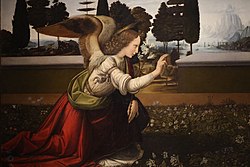
"ጂብራይል" ወደዚህ አቅጣጫ ያዞራል። በኢራን ውስጥ ለሚገኘው መንደር ፣ ጀብሪልን ይመልከቱ።ቅዱስ ገብርኤልበሊዮናርዶ ዳ ቪንቺ የማስታወቂያው ዝርዝር፣ ሐ. 1472–1476- የመላእክት አለቃ- መለኮታዊ ሄራልድ- የራዕይ መልአክየተከበረው በ- ቅዱሳንን የሚያከብሩ ሁሉም የክርስቲያን ቤተ እምነቶች- ሳምራዊነት- የአይሁድ እምነት- እስልምና- እና ሌሎችበዓል- መስከረም 29 ከመላእክት ሚካኤል እና ራፋኤል ጋር (የካቶሊክ ቤተ ክርስቲያን ፣ ከ 1969 በኋላ)- ማርች 24 (የምዕራባውያን ሥነ ሥርዓት ኦርቶዶክስ እና አጠቃላይ የሮማውያን የቀን መቁጠሪያ ከ 1969 በፊት)- 26 ማርች ፣ ሐምሌ 13 (የምስራቅ ኦርቶዶክስ ቤተክርስቲያን)- 13 ፓኦኒ ፣ 22 ኮያክ እና 26 ፓኦኒ (የኮፕቲክ ቤተክርስቲያን)- ታህሳስ 28 (ታህሳስ 19) እና ሐምሌ 26 (ሃምሌ 19) የኢትዮጵያ የቀን መቁጠሪያባህሪያት ነጭ ሊሊ፣ መለከት፣ የሚያብረቀርቅ ፋኖስ፣ ከገነት የመጣ ቅርንጫፍ፣ ጥቅልል እና በትርደጋፊነት መልእክተኞች (የቴሌኮሙኒኬሽን ሰራተኞችን፣ የፖስታ ሰራተኞችን፣ የሬዲዮ ብሮድካስተሮችን፣ ዲፕሎማቶችን እና አምባሳደሮችን ጨምሮ)፣ ቴምብር ሰብሳቢዎች፣ ሳንታንደር፣ ሴቡበአይሁድ እምነት ፣ በክርስትና ፣ በእስልምና እና በሌሎች የአብርሃም ሃይማኖቶች
"Angel Gabriel" redirects here. For the American comic book artist, see
Angel Gabriele.
"Jibrail" redirects here. For the village in Iran, see
Jebreil.
Gabriel |
|---|
 |
|
| Venerated in | |
|---|
| Feast | |
|---|
| Attributes | White lily, trumpet, shining lantern, branch from Paradise, scroll, and scepter[1] |
|---|
| Patronage | messengers (including telecommunication workers, postal workers, radio broadcasters, diplomats, and ambassadors), stamp collectors, Santander, Cebu[2] |
|---|
In Judaism, Christianity, Islam, and other Abrahamic religions Gabriel ( GAY-bree-əl)[N 2] is an archangel with the power to announce God's will to humankind as the messenger of God. He is mentioned in the Hebrew Bible, the New Testament, and the Quran.
In the Book of Daniel, Gabriel appears to the prophet Daniel to explain his visions.[3] Gabriel also appears in the Jewish apocryphal First Book of Enoch (e.g., 1 Enoch 20:7–8) and other ancient Hebrew writings incompletely preserved or wholly lost in Hebrew.[4] Alongside the archangel Michael, Gabriel is described as the guardian angel of the Israelites, defending them against the angels of the other peoples.[5][6]
In the New Testament's Gospel of Luke, Gabriel appears to Zechariah foretelling the birth of John the Baptist. Gabriel later appears to Mary, mother of Jesus to announce that she would conceive and bear a son (i.e., Jesus) via virgin birth. Many branches of Christianity—including Eastern Orthodoxy, the Catholic Church, Lutheranism, and Anglicanism—revere Gabriel as a saint.
Islam regards Gabriel as an archangel sent by God to various prophets, including Muhammad. The first five verses of the Al-Alaq, the 96th chapter of the Quran, are believed by Muslims to have been the first verses of the revelations given by Gabriel to Muhammad.
Etymology
The name Gabriel (Hebrew: גַּבְרִיאֵל, Gaḇrīʾēl) is composed of the first person singular possessive form of the Hebrew noun gever (גֶּבֶר), meaning "man",[7] and ʾĒl, meaning "God" or "mighty one".[8] This would translate the archangel's name as "man of God". Proclus of Constantinople, in his Homily 1, stated that the meaning of Gabriel's name prefigured that Jesus, whose birth was announced by Gabriel, would be both man and God.[9]
In his work, the four homilies on the Missus Est", Saint Bernard (1090–1153 AD) interpreted Gabriel's name as "the strength of God", and his symbolic function in the gospel story as announcement of the strength or virtue of Christ, both as the strength of God incarnate and as the strength given by God to the timorous people who would bring into the world a fearful and troublesome event. "Therefore it was an opportune choice that designated Gabriel for the work he had to accomplish, or rather, because he was to accomplish it therefore he was called Gabriel."[10]
Judaism
Hebrew Bible
The only book in the Hebrew Bible that explicitly mentions Gabriel is the Book of Daniel. Gabriel appears to the prophet Daniel to explain his visions (Daniel 8:15–26, 9:21–27). Later, in Daniel's final vision, an angel, not named but likely Gabriel again, appears to him and speaks of receiving help from Michael in battle against the prince of Persia and also Michael's role in times to come. The Book of Daniel contains the first instances of named angels in the Hebrew Bible. Gabriel's main function in the Book of Daniel is that of revealer, responsible for interpreting Daniel's visions, a role he continues to have in later traditions. In Daniel 10–12, while Gabriel is not named directly, many scholars infer his continued presence as the messenger who delivers Daniel’s final apocalyptic revelations.


"Angel Gabriel" redirects here. For the American comic book artist, see Angel Gabriele.
"Jibrail" redirects here. For the village in Iran, see
Jebreil.
Gabriel |
|---|
|
|
| Venerated in | |
|---|
| Feast | |
|---|
| Attributes | White lily, trumpet, shining lantern, branch from Paradise, scroll, and scepter[1] |
|---|
| Patronage | messengers (including telecommunication workers, postal workers, radio broadcasters, diplomats, and ambassadors), stamp collectors, Santander, Cebu[2] |
|---|
In Judaism, Christianity, Islam, and other Abrahamic religions Gabriel ( GAY-bree-əl)[N 2] is an archangel with the power to announce God's will to humankind as the messenger of God. He is mentioned in the Hebrew Bible, the New Testament, and the Quran.
In the Book of Daniel, Gabriel appears to the prophet Daniel to explain his visions.[3] Gabriel also appears in the Jewish apocryphal First Book of Enoch (e.g., 1 Enoch 20:7–8) and other ancient Hebrew writings incompletely preserved or wholly lost in Hebrew.[4] Alongside the archangel Michael, Gabriel is described as the guardian angel of the Israelites, defending them against the angels of the other peoples.[5][6]
In the New Testament's Gospel of Luke, Gabriel appears to Zechariah foretelling the birth of John the Baptist. Gabriel later appears to Mary, mother of Jesus to announce that she would conceive and bear a son (i.e., Jesus) via virgin birth. Many branches of Christianity—including Eastern Orthodoxy, the Catholic Church, Lutheranism, and Anglicanism—revere Gabriel as a saint.
Islam regards Gabriel as an archangel sent by God to various prophets, including Muhammad. The first five verses of the Al-Alaq, the 96th chapter of the Quran, are believed by Muslims to have been the first verses of the revelations given by Gabriel to Muhammad.
Etymology
The name Gabriel (Hebrew: גַּבְרִיאֵל, Gaḇrīʾēl) is composed of the first person singular possessive form of the Hebrew noun gever (גֶּבֶר), meaning "man",[7] and ʾĒl, meaning "God" or "mighty one".[8] This would translate the archangel's name as "man of God". Proclus of Constantinople, in his Homily 1, stated that the meaning of Gabriel's name prefigured that Jesus, whose birth was announced by Gabriel, would be both man and God.[9]
In his work, the four homilies on the Missus Est", Saint Bernard (1090–1153 AD) interpreted Gabriel's name as "the strength of God", and his symbolic function in the gospel story as announcement of the strength or virtue of Christ, both as the strength of God incarnate and as the strength given by God to the timorous people who would bring into the world a fearful and troublesome event. "Therefore it was an opportune choice that designated Gabriel for the work he had to accomplish, or rather, because he was to accomplish it therefore he was called Gabriel."[10]
Judaism
Hebrew Bible
The only book in the Hebrew Bible that explicitly mentions Gabriel is the Book of Daniel. Gabriel appears to the prophet Daniel to explain his visions (Daniel 8:15–26, 9:21–27). Later, in Daniel's final vision, an angel, not named but likely Gabriel again, appears to him and speaks of receiving help from Michael in battle against the prince of Persia and also Michael's role in times to come. The Book of Daniel contains the first instances of named angels in the Hebrew Bible. Gabriel's main function in the Book of Daniel is that of revealer, responsible for interpreting Daniel's visions, a role he continues to have in later traditions. In Daniel 10–12, while Gabriel is not named directly, many scholars infer his continued presence as the messenger who delivers Daniel’s final apocalyptic revelations.
Though he is not specifically named, the "man clothed with linen" mentioned in chapters 9 and 10 of the Book of Ezekiel is interpreted as Gabriel in Yoma 77a of the Babylonian Talmud.[11]
Intertestamental literature
Gabriel is not referred to as an archangel in the Hebrew Bible or the New Testament. However, a wealth of Jewish literature was written during the Second Temple period (516 BC–70 AD). Much of the literature produced during this intertestamental period was of the apocalyptic genre. The names and ranks of angels and demons were greatly expanded in this literature, and each had particular duties and status before God. Gabriel was first referred to as an archangel in these texts.
In particular, there are many references to Gabriel in the Book of Enoch. According to the book, Michael, Uriel, Raphael, and Gabriel complain to God about the many wrongs perpetrated by Azazel and Samyaza (especially the fact that they revealed "eternal secrets" and sins to mankind and defiled themselves with women who later gave birth to giant offspring). As a result, God decides to destroy the Earth (which has been corrupted by the fallen angels, led by Azazel and Samyaza) and all of its inhabitants except for Noah. He sends Gabriel and the other archangels to go after the fallen angels and cast them into the darkness until the day of their judgment. In Chapter 20, Gabriel is listed as one of seven holy angels (Uriel, Raphael, Raguel, Michael, Saraqâêl, Gabriel, and Remiel) who watch. In Chapter 40, Gabriel is listed as one of four presences (Michael, Raphael, Gabriel, and Phanuel) who stand on the four sides of God. These four archangels will be the ones to cast the fallen angels into the abyss of condemnation on Judgment Day. The final reference to Gabriel in the Book of Enoch is found in Chapter 71: "And that Head of Days came with Michael and Gabriel, Raphael and Phanuel, thousands and ten thousands of angels without number."


.webp)


.jpg)


